
About Urmul Seemant
Urmul Seemant is a values-driven and professionally managed organisation dedicated to innovation and implementation in community development. Established in 1994 near Indo Pak Border, With a legacy spanning over three decades, we have built a vast stakeholder network and pioneered systems-based solutions that integrate sustainability, resilience, and equity. Guided by systems thinking and ecosystem approach, our interventions span Agroecology, Pastoralism, Crafts, Education, Health, Energy, Livelihoods, and Climate resilience—making us a trusted partner in community-driven change and sustainable development.
Through our work, we engage with over 30,000 households, including farmers, pastoralists, and artisans, who are integral to our food and textile production systems and other development initiatives. Our approach is rooted in inclusivity and co-creation, ensuring that marginalized communities not only overcome immediate challenges but also build long-term resilience. By leveraging local knowledge, forging partnerships, harnessing appropriate technologies, and optimizing resources, we work towards scalable, impactful, and sustainable solutions across some of India’s most challenging geographies - the Thar Desert and Ladakh.
Our Story: Rooted in the Cooperative Movement, Driven by Community Leadership
Urmul Seemant Samiti traces its origins to the cooperative movement of western Rajasthan. In 1984, the URMUL Trust was established as a social development initiative of the URMUL Dairy Cooperative, supported by a contribution of 10 paise per litre of milk from cooperative members, reflecting the collective commitment of rural producers towards social development.
Under the leadership of Shri Sanjay Ghosh and Shri Arvind Ojha, the URMUL movement evolved into a broader approach to rural development, rooted in community participation and local leadership. Their vision helped transform the cooperative platform into a wider movement for rural development, empowering communities to become active agents of change.
Initially focused on health and education, the work expanded to include livelihoods, women’s empowerment, NRM and drought relief. In 1988, development efforts extended into the Indira Gandhi Canal command area, reaching remote desert communities. In 1992, the URMUL movement began a process of decentralisation to strengthen community-led development. This led to the establishment of Urmul Seemant, formally registered on 4th May 1994 under the Rajasthan Societies Registration Act, 1958.
Since then, Urmul Seemant has remained committed to building resilience of the Desert communities by enabling people to define their priorities, lead their development, and build institutions for lasting change.
Livelihood
Since its inception, Urmul Seemant has been deeply engaged in livelihoods and enterprise development, evolving pilot projects into sustainable, community-owned enterprises.
-
Income Generation Programme: One of our earliest interventions, a handicrafts initiative for war refugee families, evolved into Urmul Desert Crafts, an impact-driven textile enterprise of 4000 strong women, that continues to support rural artisans.
-
The Camel Partnership: Our pastoralists-owned camel milk value chain initiative led to the commercial launch of camel milk in Rajasthan. In turn it has led to camel conservation and herders starting to increase their herd size. Formation of Bahula Naturals, an impact enterprise driving camel conservation, sustainable dairy farming, and agroecology-based livelihoods.
-
Magra Model: Development of alternative product lines for green buildings using indigenous wool and development of brand Magra towards institutionalisation of this work. Today, a dedicated impact enterprise Samkhya manages this value chain.
In recent years, our focus has expanded beyond pilot programs to incubating mid-to-large-scale rural collectives and enterprises. For example:
-
Our dairy program currently supports 2,500 pastoral families, with diversified dairy interventions that extend beyond milk to cheese production and alternative dairy sources like goat, sheep, and camel milk.
-
Our agroecology initiatives, spanning rainfed and irrigated regions, focus on soil regeneration, horticulture, farmer training, biogas adoption, market linkages, and micro-entrepreneurship. Currently, 8,000+ families are engaged in these efforts
-
Over the next three years, we aim to expand our agroecology programs to 30,000 families, ensuring wider adoption of sustainable agricultural practices and regenerative food systems.
Explore the Income Generation Programme →
Explore the Camel Partnership →
Health
Urmul Seemant has been at the forefront of improving health outcomes in remote and underserved communities of the Thar Desert through community-led healthcare initiatives and preventive health interventions. Recognizing the challenges of limited access to quality healthcare services in rural areas, the organization has developed innovative models that empower local communities to take charge of their health and well-being.
-
Barefoot Doctor Initiative: Urmul Seemant has trained more than 800 Community Health Workers under its pioneering Barefoot Doctors Initiative. These community-based health workers serve as the first point of contact for healthcare services, providing basic health education, preventive care, referrals, and awareness on critical health issues within their villages.
-
Primary Health Facility: The organization facilitates access to primary healthcare services in remote locations, ensuring that vulnerable populations, particularly women, children, and marginalized communities, receive timely health support and guidance.
-
Health Awareness: Through participatory approaches, Urmul Seemant promotes health awareness, nutrition education, maternal and child healthcare, hygiene practices, disease prevention, and behavior change communication to improve overall community health outcomes.
-
Specialized health camps for TB and Malaria: Specialized health camps and awareness campaigns are organized to address communicable diseases such as malaria and tuberculosis. These interventions focus on early detection, treatment support, prevention, and community awareness to reduce disease burden in rural areas.
-
Integrated Child Development Programme: Urmul Seemant successfully managed the Integrated Child Development Services (ICDS) Programme in Bikaner district from 1992 to 2019, overseeing the operations of more than 160 Anganwadi Centres. The initiative became a recognized model for delivering quality Early Childhood Care and Development (ECCD) services in the challenging desert environment.
Education
Education has remained at the core of Urmul Seemant’s mission—particularly in advancing girls’ education and skilling across Rajasthan’s most underserved and remote regions.
-
Balika Shivir Programme : Balika Shivir, Urmul Seemant’s flagship Girls’ Education Bridging Program, has empowered over 50,000 girls from some of the remotest parts of Rajasthan to enter and thrive in mainstream education. Locally designed and implemented, the model is rooted in inclusive and place-sensitive education principles. These intensive six-month residential courses have proven transformative, equipping out-of-school girls with foundational learning and life skills. Thousands of alumni have gone on to become empowered contributors to society—pursuing careers in both the public and private sectors.
-
Shiksha Karmi Programme : From 1995 to 2007, Urmul Seemant managed the Shiksha Karmi Programme and the State Resource Centre for education in the desert region. This initiative led to the establishment of hundreds of schools in some of the most inaccessible desert villages. Thousands of teachers were identified, trained, and supported by Urmul on behalf of the Government of Rajasthan—marking a turning point in the educational landscape of western Rajasthan.
-
Integrated Rural Development Programme: In collaboration with Plan International, Urmul led a comprehensive Integrated Rural Development Programme covering Education, Health, Livelihoods, NRM, ECCD, and STEM. Spanning over 150 villages in western Rajasthan, the programme brought transformative outcomes to some of the region’s most marginalised communities.
-
Girl’s Residential Education Programme: Urmul Seemant continues to build on this legacy through residential hostels and skilling centres that go beyond education—fostering vocational training, digital literacy, and leadership development. These centres aim to equip girls and young women with the tools to lead change in their communities and break the cycle of intergenerational poverty.
Climate Action
Building Climate Resilience Through Renewable Energy, Ecosystem Restoration, and Green Innovation
The Thar Desert is increasingly vulnerable to the impacts of climate change, including rising temperatures, erratic rainfall, land degradation, and water scarcity. Urmul Seemant works alongside rural communities to develop climate-resilient solutions that strengthen livelihoods, restore ecosystems, and contribute to a low-carbon future.
-
Renewable Energy and Carbon Reduction: Urmul Seemant promotes clean energy solutions that reduce dependence on traditional biomass and fossil fuels. Through the promotion of household biodigesters, rural families gain access to clean cooking fuel while utilizing nutrient-rich slurry to improve soil health. These interventions collectively contribute to an estimated 20,000+ tonnes of carbon emission reductions annually.
-
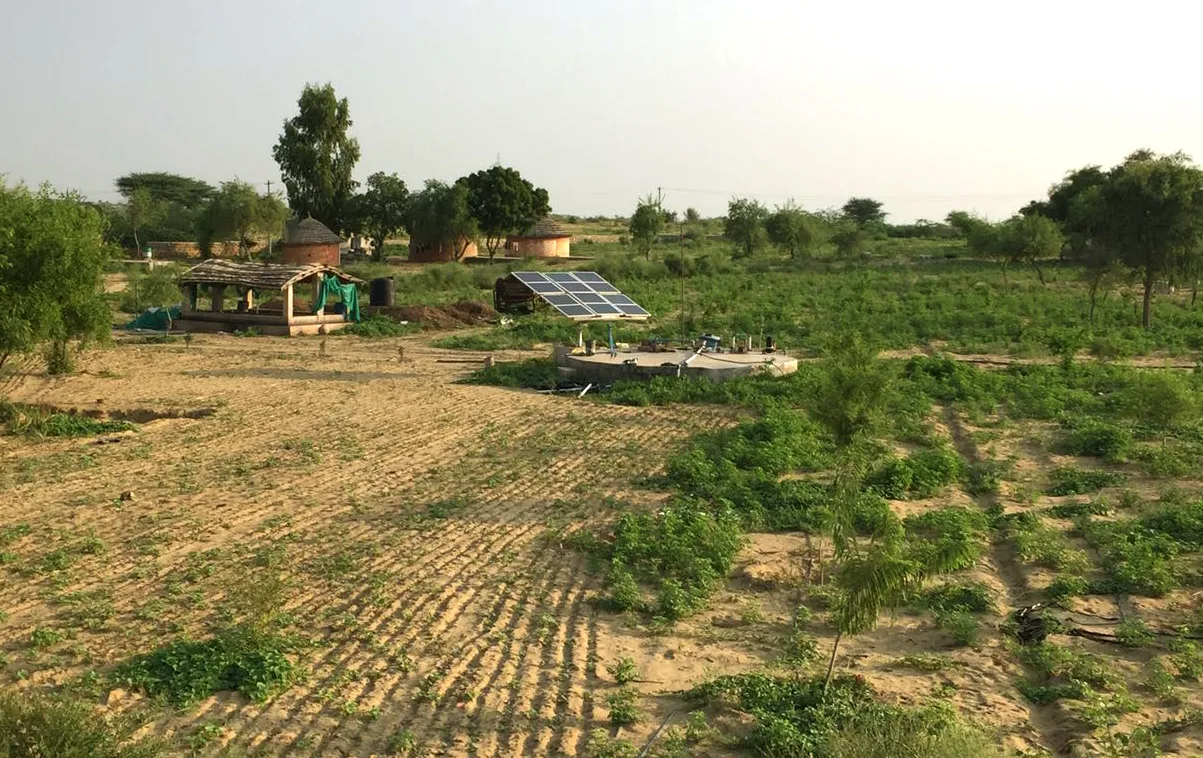
Solarization of Rural Enterprises: To advance sustainable rural livelihoods, Urmul Seemant is facilitating the solarization of processing units and enterprises established under its Livelihoods programme. The initiative aims to reduce operational costs, improve energy access, and lower the carbon footprint of rural businesses.
-
Green Buildings and Sustainable Construction: Urmul Seemant is pioneering climate-responsive building solutions by promoting the use of locally available, sustainable materials in the built environment. A key innovation is the use of sheep wool as a natural insulation material, improving thermal efficiency and reducing energy consumption in buildings. This approach not only lowers carbon emissions but also creates value-added market opportunities for pastoralist communities and strengthens the circular rural economy.
-
Plantation and Ecosystem Restoration: The organization promotes the plantation of drought-resilient, indigenous, and livelihood-enhancing species across farming systems and community lands. These efforts support carbon sequestration, soil restoration, biodiversity conservation, and climate adaptation while creating long-term economic and environmental benefits for rural communities.
Sustainable Agriculture
Urmul Seemant promotes sustainable and climate-resilient agriculture practices that enhance soil health, improve farm productivity, and strengthen the livelihoods of smallholder farmers in the arid regions of Rajasthan. Through a combination of innovation, farmer-led learning, and ecological farming practices, the programme supports the transition towards regenerative and resource-efficient agriculture.
By 2030, Urmul Seemant aims to support 30,000 farming families in adopting sustainable agriculture practices that improve soil health, increase farm resilience, and reduce input costs across the Thar Desert region.
-
Household Biogas and Soil Fertility Enhancement: More than 2,500 farming families have benefited from household biodigesters that provide clean cooking fuel while producing nutrient-rich biogas slurry. Farmers use this organic slurry as a soil enhancer, reducing dependence on chemical fertilizers and improving soil health and crop productivity.
-
Arid Horticulture Promotion: The programme has supported over 150 farming families in adopting arid horticulture practices suited to desert conditions. By promoting drought-resilient fruit crops and sustainable water-use practices, farmers are able to diversify their income sources and improve farm resilience.
-
Biochar for Soil Carbon Enhancement: Urmul Seemant is promoting the use of biochar through a community-based micro-entrepreneurship model. Biochar improves soil structure, enhances moisture retention, increases nutrient availability, and contributes to long-term carbon sequestration, helping farmers build climate-resilient farming systems.
-
Land Rejuvenation and Soil Restoration: The organization is working towards bringing 25,000 Acre of agricultural land under soil rejuvenation practices. Through the promotion of organic inputs, improved soil management, and sustainable farming techniques, the programme seeks to restore soil fertility and enhance long-term farm productivity.
-
Demonstration Farms and Farmer Capacity Building: The organization operates demonstration farms that serve as learning and innovation hubs for farmers. These sites showcase sustainable agricultural technologies, natural farming practices, soil health management, and climate-resilient farming models. Regular training programmes, exposure visits, and field demonstrations help strengthen farmers' knowledge and skills.
Natural Resource Management
Urmul Seemant has a legacy of over three decades in pioneering impactful natural resource management (NRM) in Rajasthan’s desert regions. In the early 1990s, we developed a low-cost distributary (Khala) covering model for the Indira Gandhi Canal using local materials. Successfully adopted across sand dune–prone areas of western Rajasthan, it helped prevent sand encroachment and ensured the delivery of millions of litres of water to tail-end farmers.
-
Our partnership with the Command Area Development Authority (GoR) supported the resettlement of hundreds of farmers on newly allotted canal-irrigated lands. We provided farm input services and mechanisation support to over 2,000 farmers, facilitating sustainable cultivation in the desert.
-
Over the years, Urmul Seemant has implemented large-scale water conservation across western Rajasthan. With CAPART (GoI) support, we constructed or renovated over 200 traditional water structures (Talaabs, Bawadis, Jods) in multiple districts. Between 2001–2006, through the ICDS programme in Bikaner, we equipped 130 Anganwadi centres with rainwater harvesting systems (~10,000 litres each), enhancing water resilience in early childhood care.
-
From 2000–2015, with Plan International, we helped build 2,500 household-level water structures (kunds/tankas ~10,000 litres) in Bikaner. During severe droughts, Urmul provided emergency water to over 40 villages. Additionally, with Water Harvest’s support, 60 highly marginalised families in three Bikaner villages received water structures, ensuring year-round access.
-
These models reflect our long-standing commitment to climate resilience, water security, and regenerative dryland development.